The SMASH Framework: Five Principles for More Intentional, Sustainable Success
Why a Framework for Success Matters
I developed the SMASH framework around an idea that has become increasingly important to me: meaningful progress requires more than knowing what you want and working hard to get it. The way you approach your goals matters, particularly when you are balancing professional responsibilities with the rest of your life. Many people are capable of doing difficult things. They have built careers, managed businesses and handled responsibilities that other people rely on them to manage. Their problem is not necessarily a lack of ability. It is that the way they are operating no longer supports the kind of success they want. SMASH provides a practical structure for looking at that gap and deciding what needs to change.
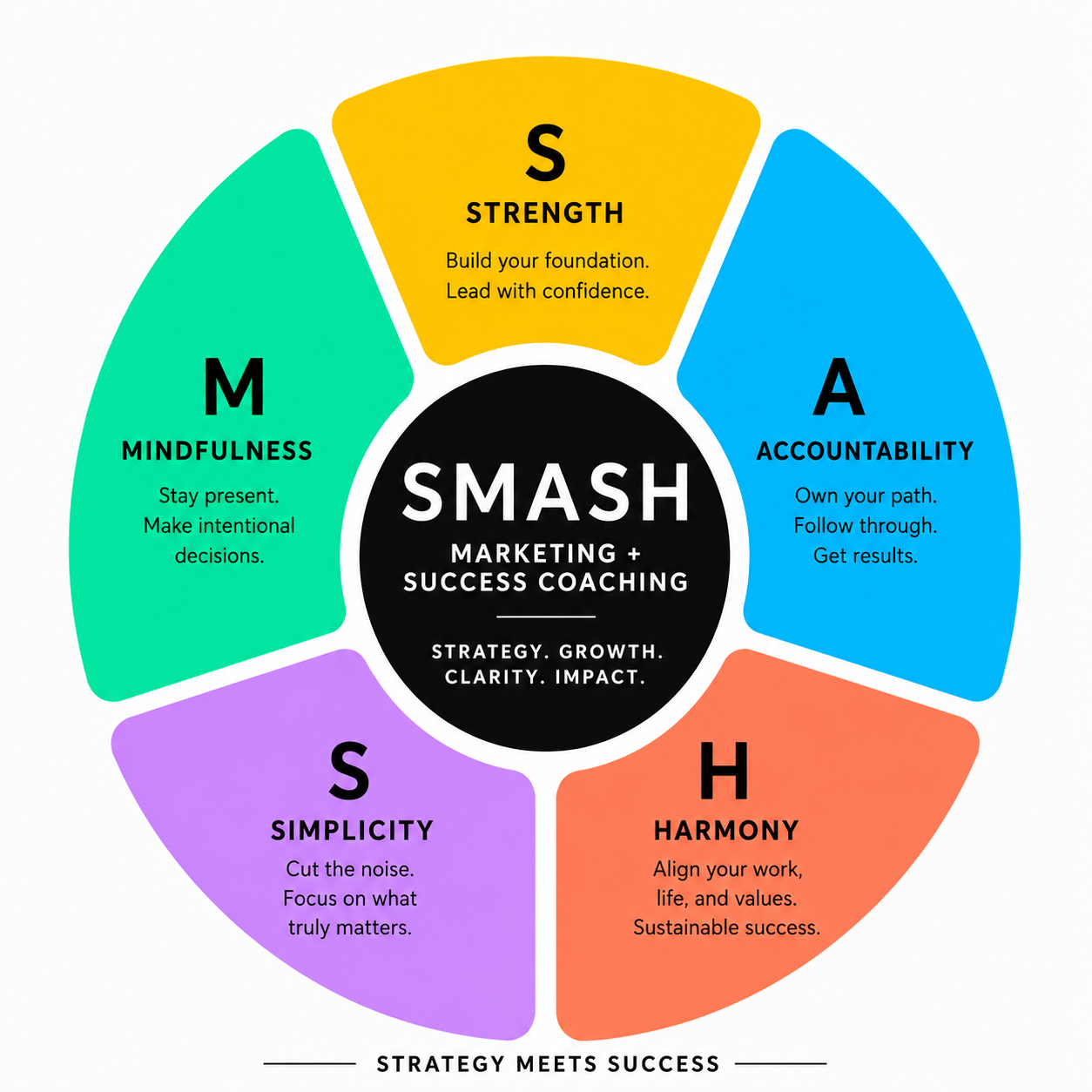
SMASH stands for Strength, Mindfulness, Accountability, Simplicity and Harmony. These principles are intended to help you look at the way you make decisions and pursue goals rather than assume that working harder will solve every problem. They are relevant whether you are navigating a professional transition, trying to change a habit or figuring out how to move a business forward without letting it take over your life.
Strength and Mindfulness
Strength is about recognizing what you can do while also understanding where your limits are. It is not a requirement to keep pushing regardless of the circumstances. Sometimes strength means taking responsibility for a decision you have been avoiding. At other times, it means acknowledging that the approach you have been using is not producing the result you expected. Being willing to reassess is part of being capable, even when it means admitting that something needs to change.
Mindfulness brings attention to the way you are making decisions and responding to situations. Without that awareness, it is easy to run on habit, accept assumptions as facts or continue pursuing a goal without checking whether it still matters to you. Taking time to examine your reactions can help you recognize when you are acting out of obligation, fear of disappointing someone or a belief that you should be able to handle everything yourself. Once you understand what is influencing a decision, you have a better chance of making a choice that reflects what you actually want.
Accountability and Simplicity
Accountability is the part that connects intention with action. It is easy to make plans when you are feeling motivated, but plans become more complicated when daily responsibilities intervene or the work turns out to be uncomfortable. Useful accountability helps you stay connected to what you decided to do and examine what happens when you do not follow through. It should not be based on shame. If you miss a commitment, the important question is not how to punish yourself for it. It is whether the commitment was realistic, whether something got in the way and what you need to change so that your next decision has a better chance of succeeding.
Simplicity is about being willing to question complexity rather than automatically adding another process, tool or task. In business, I have seen how easily teams can become occupied with activity that no longer contributes much to the result they want. The same pattern can show up in personal goals. We create complicated plans because they feel thorough, even when a simpler approach would be easier to maintain. Simplifying does not mean ignoring important details. It means understanding which details matter and directing your effort accordingly.
Harmony and the Bigger Picture
Harmony brings the wider picture into view. Success in one area of life does not happen in isolation from everything else. A career decision affects time and energy outside work. A business goal can change the demands placed on a family. Harmony is not about making every part of life perfectly balanced at all times. It is about being aware of the trade-offs you are making and deciding whether they are ones you want to continue making.
These principles are connected, but they are not a formula that guarantees the same outcome for every person. Someone may need to build confidence in their own judgment before they can make a difficult decision. Another person may know exactly what needs to change but need a more realistic plan and consistent accountability to act on it. The framework gives us a way to examine the situation without assuming that every problem has the same cause. In coaching, that means identifying where the client is now, understanding what is getting in the way and deciding what action would make a meaningful difference.
SMASH is not about squeezing more productivity out of every day. It is about making progress in a way that reflects your priorities and can be sustained over time. The framework gives you a place to start, but the value comes from how you apply it to the decisions you face and the changes you want to make.
