Imposter Syndrome in the Age of AI
How to stay sharp without trying to know, do, and be everything
By Susan Hovey | Founder, SMASH Marketing & Success Coaching
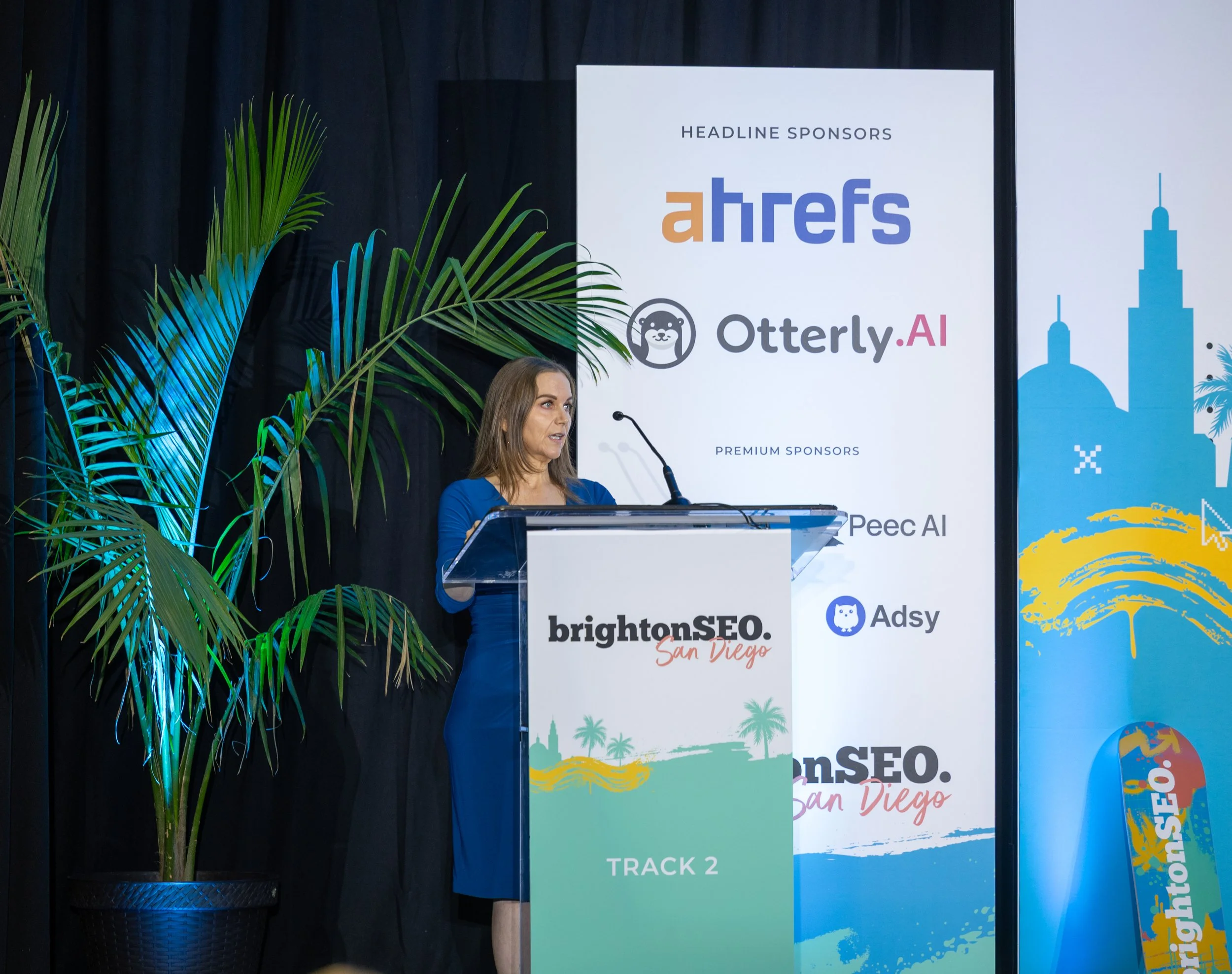
Adapted from my talk at BrightonSEO San Diego, September 2026
AI has made the ground underneath marketing feel like it is moving. A new tool appears, a familiar task changes, and the language of our profession seems to acquire another acronym overnight. If you have wondered whether the skills you spent years building still matter, you are in good company. I asked a room of marketers at BrightonSEO to raise their hands if AI had made them question their careers. Hands went up.
Change can make even experienced people feel unsteady. The trouble begins when we take that feeling as proof that we are incompetent. I know how quickly that can happen because I spent years believing that one day someone would discover I did not really know marketing.
When a reasonable question feels like an accusation
I came into marketing without a marketing degree. I taught myself many of the design programs and skills I needed, and generous people taught me along the way. That gave me resourcefulness, but it also left me with a nagging sense that I was behind people who had followed a more traditional path.
Years ago, new leadership brought closer scrutiny to my work. Questions came about reporting, KPIs, and why we were or were not doing what other marketers did. They were fair questions to ask. Marketing leaders should expect to explain decisions and measure results. But I heard each question as evidence that the fear I had carried for years was finally coming true.
First I thought, “How could I have anticipated a need nobody had communicated?” Then I turned on myself: “Maybe a better marketer would have known.” A request for clarity became a verdict on my abilities. I was so busy trying to prove I was not the problem that it became harder to solve the problem in front of me.
Eventually I had to take inventory. What was mine to own? What did I need to learn? What had changed? What expectations needed clarification? And where was I trying to read someone else’s mind? Accountability matters. So does the ability to examine a gap without turning it into an attack on your identity.
I could have done twice as much work, but if the direction was unclear, I might simply have done twice as much work in the wrong direction. The better move was to ask what mattered, agree on how success would be measured, and then act. That lesson still helps me when a new AI capability or a confident opinion online makes me feel I should already have an answer.
The expertise you need depends on the work
I once worked on a monthly email newsletter whose customer list grew from about 20,000 to roughly 400,000, with an open rate around 30 percent. It was meaningful work in that business. Later I moved to a different industry where frequent email was not the right engine. The business needed SEO and local visibility. My email experience had not become worthless; the problem had changed.
Walk around a search conference and you will hear persuasive cases for technical SEO, digital PR, content, analytics, local search, and AI. Many of those speakers are right about what worked in their particular situation. Their expertise is an invitation to learn, not evidence that your work has no value.
This is where a slightly ridiculous thought helped me: I am never going to become coffee. I am still a damn good cup of tea. I had spent so much energy trying to become whichever kind of marketer someone else seemed to want that I was overlooking what I brought to the table. I can learn new skills, seek help, and change direction without treating my existing strengths as a flaw.
Stop trying to know everything
The first part of my process is to stop converting awareness into obligation. Seeing a new tactic does not make it your next priority. Hearing about a clever AI workflow does not mean you must master it by Friday.
When something new catches my attention, I try to ask a more useful set of questions. Does it solve a real problem for this business or this customer? Do I need to master it, understand the basics, run a small test, ask a specialist, or leave it alone for now? What would make me change my mind?
That is the difference between curiosity and panic. Curiosity makes room to evaluate an idea. Panic makes every idea an assignment. The people I trust most in marketing do not pretend to carry every answer in their heads. They know how to ask good questions, find the right expertise, and decide whether a new approach deserves the time and resources it would take.
I used to spend a lot of energy trying to prove I belonged in the room. Being teachable has made me more useful. I can say, “I do not know that yet,” and stay in the conversation long enough to learn.
Stop trying to do everything
When I felt insecure, my reflex was to produce more: another report, another article, another hour reading about the tool everyone seemed to be using. More effort sometimes helped. Often it gave me more input and less time to think. A packed calendar can look impressive while leaving little room for judgment.
Some of my best answers arrive after I step away from the screen. I walk, take a shower, or give myself a quiet stretch of time, and the problem becomes clearer. The pause lets me connect what I know, notice what I still need, and separate an urgent decision from the anxious urge to keep moving. I protect that space because it improves the work.
Doing less also means choosing what not to chase. If a business has unclear positioning and customers cannot understand its offer, a new AI content workflow may produce more material without solving that problem. I would rather clarify the offer and learn what customers need before multiplying the output. Strategy becomes visible in those choices.
Stop trying to be everything
I also had to give up the idea that I should anticipate every need, excel at every specialty, and never disappoint anyone. I can be excellent at my own work and only reasonably capable in another area. That is enough to ask an informed question, collaborate with someone whose strength is different, and help the whole project move forward.
Letting other people be good at what they do did not diminish me. It made the work better. I learned more when I stopped treating someone else’s skill as a competition, and I became more present when I stopped performing certainty. Useful beats perfect.
There is a difference between growing and trying to erase yourself. Learn the tool. Take the feedback. Build the missing skill when it matters. Keep the experience and point of view that got you this far. You can become more capable without becoming somebody else.
A steadier kind of confidence
I do not have a cure for imposter syndrome. It still visits me. What I have is a way to respond when it does. I can look honestly at what is mine to own, ask for clarity, decide what deserves my attention, and make room for other people to contribute. Then I can judge the day by how I showed up: Did I prepare? Tell the truth? Stay curious? Do my part?
That kind of confidence does not require certainty about every outcome or every change coming to marketing. AI will alter tools, roles, and workflows. I can keep learning as they change. I do not need to interpret every unfamiliar thing as proof that I no longer belong.
You do not need to know everything. You do not need to do everything. You do not need to be everything. The world still needs really good tea.
Continue the conversation
If the pace of change has you second-guessing your work or struggling to choose what matters, I help business owners, leaders, and marketers find clearer priorities through marketing strategy and success coaching. Explore Success Coaching or start a conversation with me.
